Welcome!
Hello. I wanted to make this post to introduce myself as the founder and sole developer of this web application. Like many of us in the jiu-jitsu and no-gi community, this sport has changed my life in meaningful ways. It has given me friendships, health, humility, and a constant source of growth.
Nogipedia was built in my free time as a way to give back to the community. I wanted to create a structured, promotion-agnostic no-gi jiu-jitsu database with stats-based rankings, comprehensive athlete information, and more. Development of this project has taken over a year, but the idea itself has lived in my head for several years.
My goal with this site and its future mobile applications is to help grow no-gi jiu-jitsu as a sport. Nogipedia aims to be a place where newcomers and veterans alike can quickly understand who's who in submission grappling, follow matches and events, and stay up to date as the sport continues to evolve. Version 1.0 launched in 2026 and is now indexed by Google, but this is only the beginning.
I currently have a long roadmap of features I want to build, along with many athletes and matches that still need to be added. Collecting and verifying match data takes time as I am a dictator when it comes to accuracy. Much of this process involves watching matches and carefully documenting results, which is work I enjoy at times because it allows me to study athletes' careers and development over time. Going forward, Nogipedia will focus primarily on actively tracking major professional events as they happen. Lower-tier or regional events may be processed retroactively or added selectively, as they contribute little ranking points. At its core, Nogipedia is designed to track professional careers and provide meaningful rankings of athletes competing at the highest levels of no-gi jiu-jitsu .
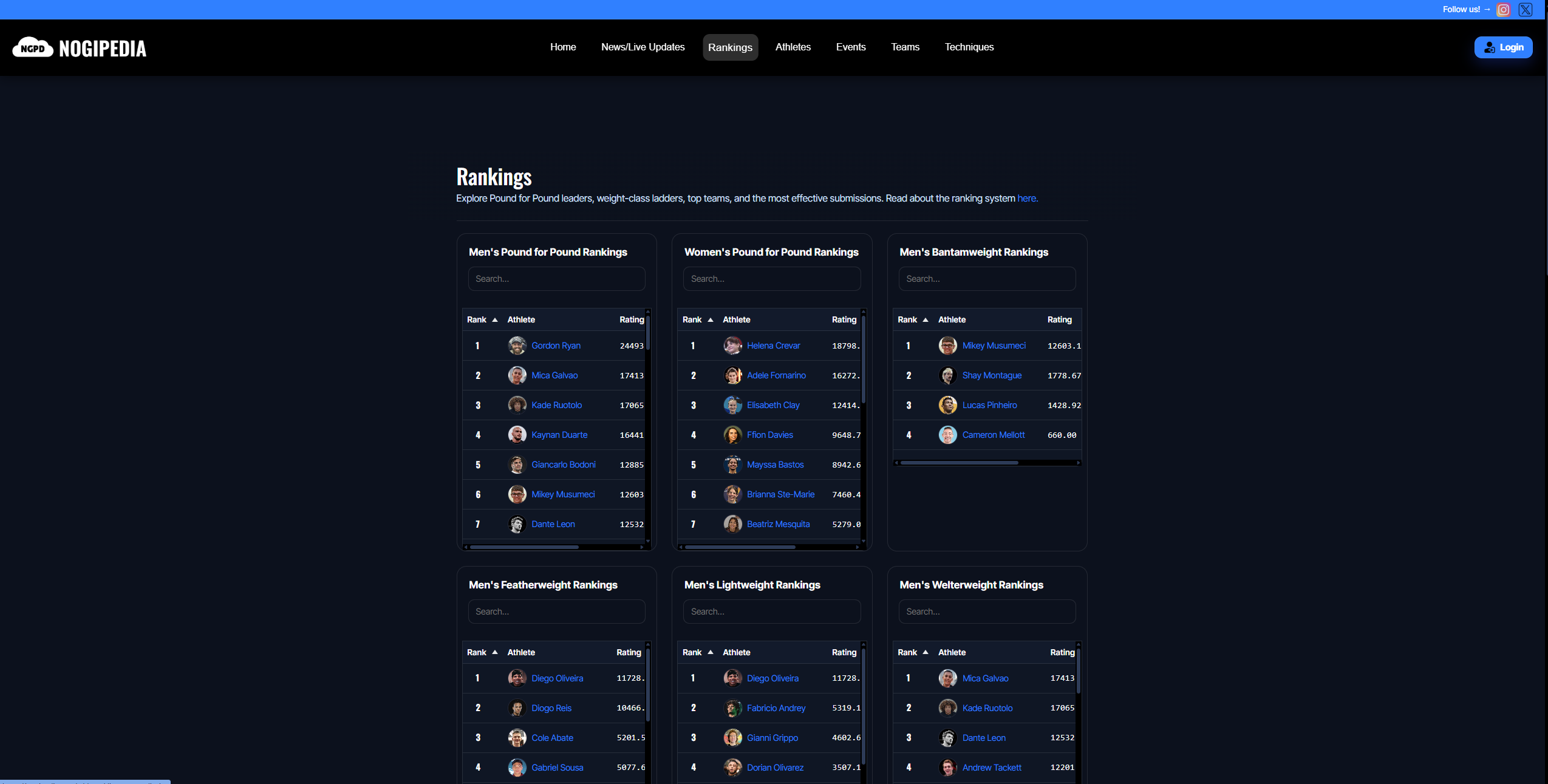
One topic worth mentioning is the ranking system. Nogipedia currently uses a hybrid points / Elo rating system that combines the best aspects of both approaches. The system starts with objective event points based on event tier, round, and performance, then applies Elo-style opponent quality adjustments that boost points for beating higher-rated opponents and reduce points for beating much lower-rated opponents. This means upsets matter immediately, while still rewarding consistency and longevity. You can read more about the ranking system here.
The hybrid approach balances the strengths of both systems. Points-based rankings can sometimes favor athletes with higher activity levels, while pure Elo/MMR systems may overreact to single results or upsets while ignoring the body of work of athletes who have competed for many years consistently. By combining both, we reward both consistency and longevity (through the points system) and upsets and opponent quality (through the Elo adjustments). No-gi jiu-jitsu, while skill-driven, still allows for surprises, and our system reflects that. My goal is to keep improving the rankings over time and remain transparent about how they are calculated.
Because this project is constantly evolving, feedback from the community is incredibly valuable. If you notice incorrect information, duplicate matches, or missing results, please submit feedback here. Athletes are also welcome to reach out directly via Instagram.
Thank you for reading, and thank you to the no-gi jiu-jitsu community for making this sport what it is. The athletes, coaches, and fans who dedicate themselves to grappling deserve recognition, and Nogipedia exists to help shine a light on both established champions and lesser-known competitors alike.
— Will